


COB Encapsulation
Precision dam-and-fill phosphor-silicone dome encapsulation for Chip-on-Board LED modules — engineered for consistent color temperature and light output across multi-die arrays.
Precision Dome Encapsulation for Chip-on-Board LED Modules
Chip-on-Board (COB) LED technology mounts multiple bare LED die directly onto a substrate in a dense array, wire-bonds them, and encapsulates the entire array beneath a single phosphor-silicone dome — producing a high-lumen, high-CRI light source widely used in downlights, spotlights, high-bay industrial fixtures and automotive lighting. The dome encapsulation step is where the module's final optical performance is determined: the phosphor-to-silicone ratio, dome height and curvature, and cure uniformity together set the module's color temperature, color rendering index and light output distribution.
Dam-and-fill dispensing is the standard method for COB encapsulation — a containment dam is first dispensed around the die array perimeter, followed by a phosphor-silicone fill that self-levels within the dam to form the dome. The dispensing challenge is maintaining consistent dome geometry and phosphor concentration across every module in a production batch, since even small variations in dome height or phosphor distribution produce visible color-point and brightness differences between modules that a lighting fixture manufacturer's quality specification will not tolerate.
SANCO dam-and-fill dispensing systems combine heated, continuously agitated barrels for high-viscosity phosphor-silicone materials with CCD vision wire-bond keep-out control, delivering the dome consistency and batch-to-batch CCT repeatability required for COB LED module production. See our desktop visual dispensing machines for platform specifications.
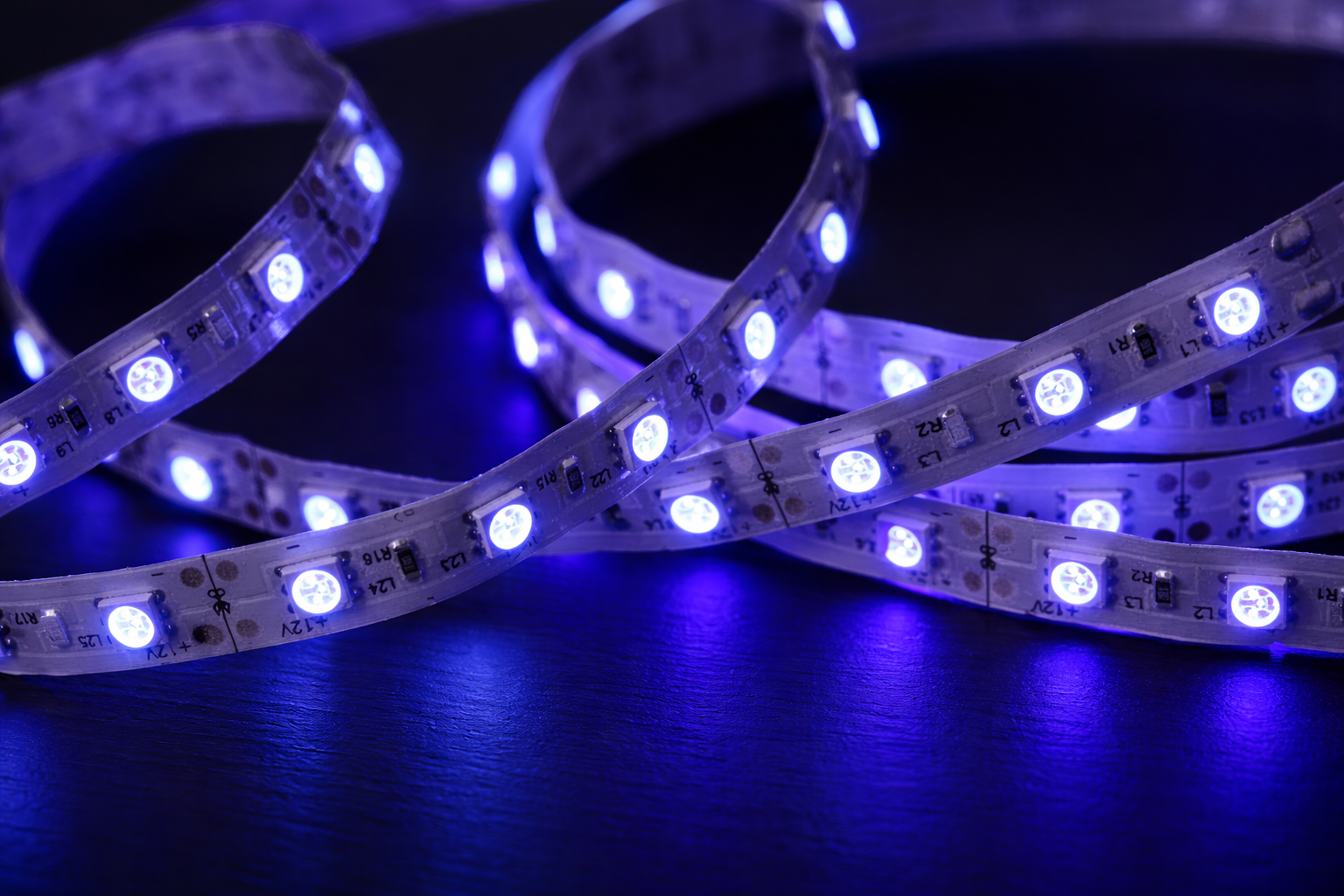
Why COB Encapsulation Demands Precision Optical Consistency
COB dome dispensing directly determines the finished module's color temperature, light output and appearance — every dispensed dome must match its neighbours within tight optical tolerance.
Dome Height & Curvature Uniformity for Light Output Consistency
Dome height and curvature affect the light extraction efficiency and beam pattern of the finished module. Variation in dispensed fill volume between modules produces measurable differences in luminous flux and beam angle between otherwise identical units.
Phosphor Settling and CCT Uniformity
Phosphor particles settle within the silicone carrier under gravity if not continuously agitated, causing the phosphor concentration — and therefore the resulting correlated color temperature (CCT) — to drift over the course of a dispensing run.
Void-Free Coverage of Wire Bonds
The dispensed dome must fully encapsulate delicate wire bonds without trapping air pockets around them; voids near wire bonds create both a cosmetic defect and a reliability risk under thermal cycling.
High-Viscosity Phosphor-Silicone Dispensing
Phosphor-loaded silicone compounds are significantly more viscous than clear encapsulants, requiring higher dispensing force and heated barrel conditions to maintain consistent flow and volume accuracy.
Dam Wall Containment for Multi-Die Arrays
The containment dam must form a continuous, gap-free wall around often irregular multi-die array footprints, since any gap allows the fill material to escape the intended dome area before curing.
Batch-to-Batch Phosphor Ratio Consistency
Color temperature specifications for COB modules are tight — often within a few hundred Kelvin — requiring that the phosphor-to-silicone mix ratio and dispensed volume remain consistent not just within a batch but across production batches over time.
Key Capabilities for COB Encapsulation
Precision Dome Volume Control
Closed-loop volumetric dosing delivers consistent fill volume per module, directly controlling dome height and light-output consistency across production batches.
CCD Vision Wire Bond Keep-Out
Optical vision confirms wire bond positions before dispensing, ensuring the dam and fill pattern fully covers bonds without dispensing-induced mechanical disturbance.
Heated High-Viscosity Barrel
Temperature-controlled barrel maintains stable flow properties for high-viscosity phosphor-silicone compounds, supporting consistent volume delivery at production speed.
In-Line Phosphor-Silicone Mixing & Agitation
Continuous agitation within the dispensing barrel keeps phosphor particles evenly suspended, maintaining consistent CCT from the first module dispensed to the last.
Dam-and-Fill Dual Material Capability
Multi-barrel configuration dispenses containment dam material and phosphor-silicone fill in sequence within a single automated programme.
Repeatable CCT Batch Consistency
Precision volume and mix-ratio control supports tight color-temperature tolerance requirements across production runs and between production batches.
Multi-Die Array Programmable Path
Dispensing path adapts to any die array footprint or dam boundary shape via programmable coordinates imported from module layout data.
Inline COB Assembly Integration
SMEMA-compatible conveyor integration links SANCO encapsulation equipment between wire bonding and cure oven stations in automated COB assembly lines.
The COB Encapsulation Process Step by Step
COB dome encapsulation must deliver precise, repeatable phosphor-silicone volume across every module to maintain optical consistency. SANCO equipment is calibrated for every stage.
Substrate Load & Wire Bond Inspection
COB substrate is loaded and wire bond integrity confirmed before any dispensing operation begins.
Dam Wall Dispensing
A containment dam is dispensed around the die array perimeter to define the dome boundary.
Phosphor-Silicone Fill Dispensing
Continuously agitated phosphor-silicone compound is dispensed within the dam, covering the full die array and wire bonds.
Dome Self-Leveling & Degas
Dispensed fill self-levels within the dam; vacuum degassing removes entrapped air before cure.
Cure & Optical Test
Thermal cure sets the dome; sample modules undergo CCT, CRI and luminous flux testing against specification.
COB Encapsulation Material Types & SANCO Compatibility
SANCO dispensing machines handle the phosphor-silicone and dam materials used across COB LED module encapsulation.
| Material Type | Viscosity Range | Cure Method | Typical Application | SANCO Compatibility |
|---|---|---|---|---|
| Phosphor-Silicone Encapsulant | 20,000 – 100,000 mPa·s | Thermal 100–150°C | Primary dome fill material converting blue LED emission to target white-light color temperature | Recommended |
| Clear Dome Silicone | 10,000 – 60,000 mPa·s | Thermal 100–150°C | Non-phosphor protective dome for pre-phosphor-coated die or colored LED arrays | Recommended |
| Dam / Wall Silicone | 40,000 – 150,000 mPa·s | Thermal or UV cure | High-viscosity containment wall material defining the dome boundary around the die array | Recommended |
| Moisture Barrier Silicone | 15,000 – 70,000 mPa·s | Thermal 100–130°C | Enhanced moisture-resistant encapsulant for outdoor and high-humidity COB module applications | Recommended |
| High-CRI Phosphor Blend | 20,000 – 90,000 mPa·s | Thermal 100–150°C | Specialty phosphor formulation for high color-rendering-index COB modules used in retail and studio lighting | Recommended |
Frequently Asked Questions
How does SANCO maintain consistent CCT across a COB production run?
SANCO dispensing barrels include continuous agitation that keeps phosphor particles evenly suspended in the silicone carrier throughout the run, preventing the settling-driven CCT drift that would otherwise occur between the first and last modules dispensed. Contact our application engineers to review agitation and mix-ratio requirements for your target CCT tolerance.
What dam material does SANCO recommend for irregular multi-die array shapes?
SANCO's programmable dispensing path follows any dam boundary geometry defined in the module layout, and higher-viscosity dam silicone formulations are recommended to maintain wall shape retention around tight corners or irregular array footprints before cure.
Can SANCO machines dispense both dam and phosphor-silicone fill without manual changeover?
Yes. SANCO dam-and-fill configurations use independent multi-barrel material paths with separate temperature and agitation control, sequencing dam dispensing followed by fill dispensing within a single automated programme.
How does SANCO prevent voids around wire bonds during dome dispensing?
Controlled dispensing approach speed and flow rate minimise fluid impact force on wire bonds, while vacuum degassing after fill dispensing removes air pockets that could otherwise become trapped around bond wire geometry.
What is a typical cycle time for COB dome dispensing on a SANCO machine?
Cycle time depends on die array size and dome volume required. For a typical mid-size COB module, SANCO dispensing machines complete dam and fill dispensing in approximately 5–15 seconds per module, with degassing and cure handled as separate downstream process steps.
Where can I learn about other LED module dispensing applications?
Visit our Applications section for guides covering LED lens bonding, mini LED dispensing, LED strip potting and lighting module potting. For equipment specifications, see our dispensing machine product pages.